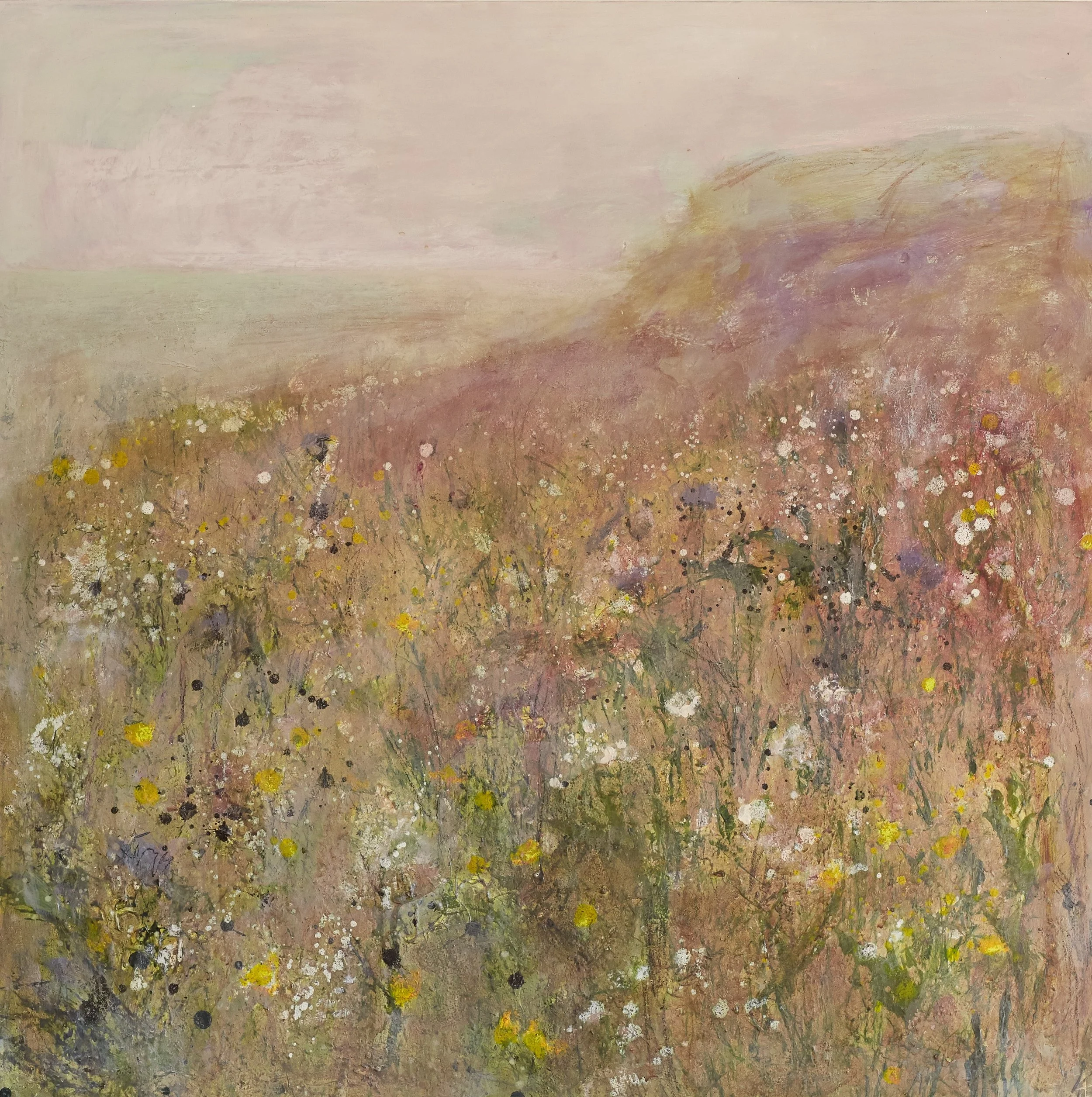
Hoy (2019)
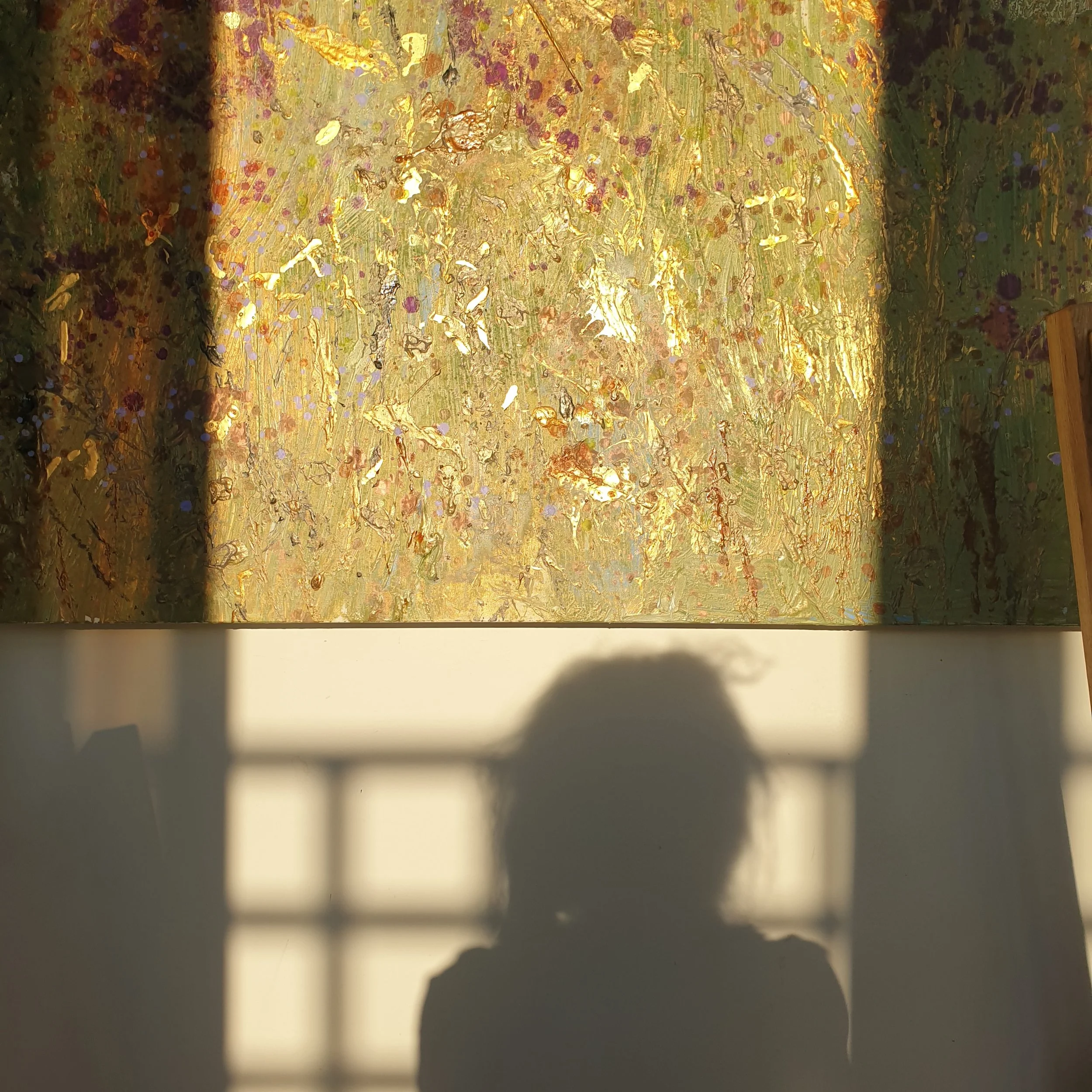
I have always worked in layers. Paint goes down, another layer changes it, and a mark that seemed important may disappear beneath something new. Sometimes I scratch back into the surface and find a colour or a trace of something I thought I had lost. At other times, I cover an area I had been working on, taking the painting in a different direction.
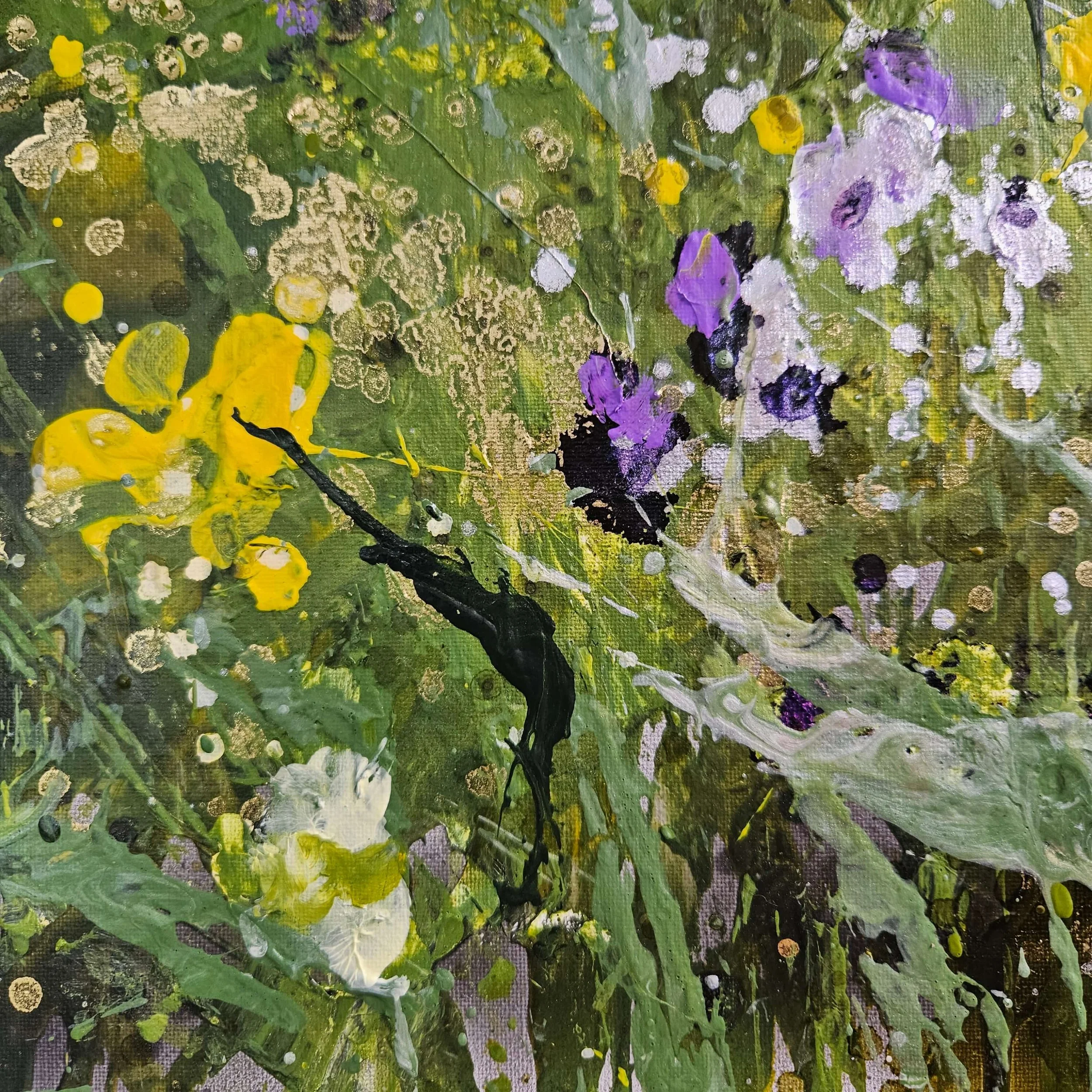
Much of my work takes place on the floor. I pour, splash and splatter paint, move around the surface and make marks with grasses and other natural materials. A stem or a blade of grass becomes a brush, leaving its own trace. The marks are shaped by the material, the movement of my hand and the way the paint meets the surface.
But the process is about more than the materials or the marks they make. I have been thinking about what I am trying to achieve through this way of working, and how it connects with my experience of the natural world.
Staying with what I see
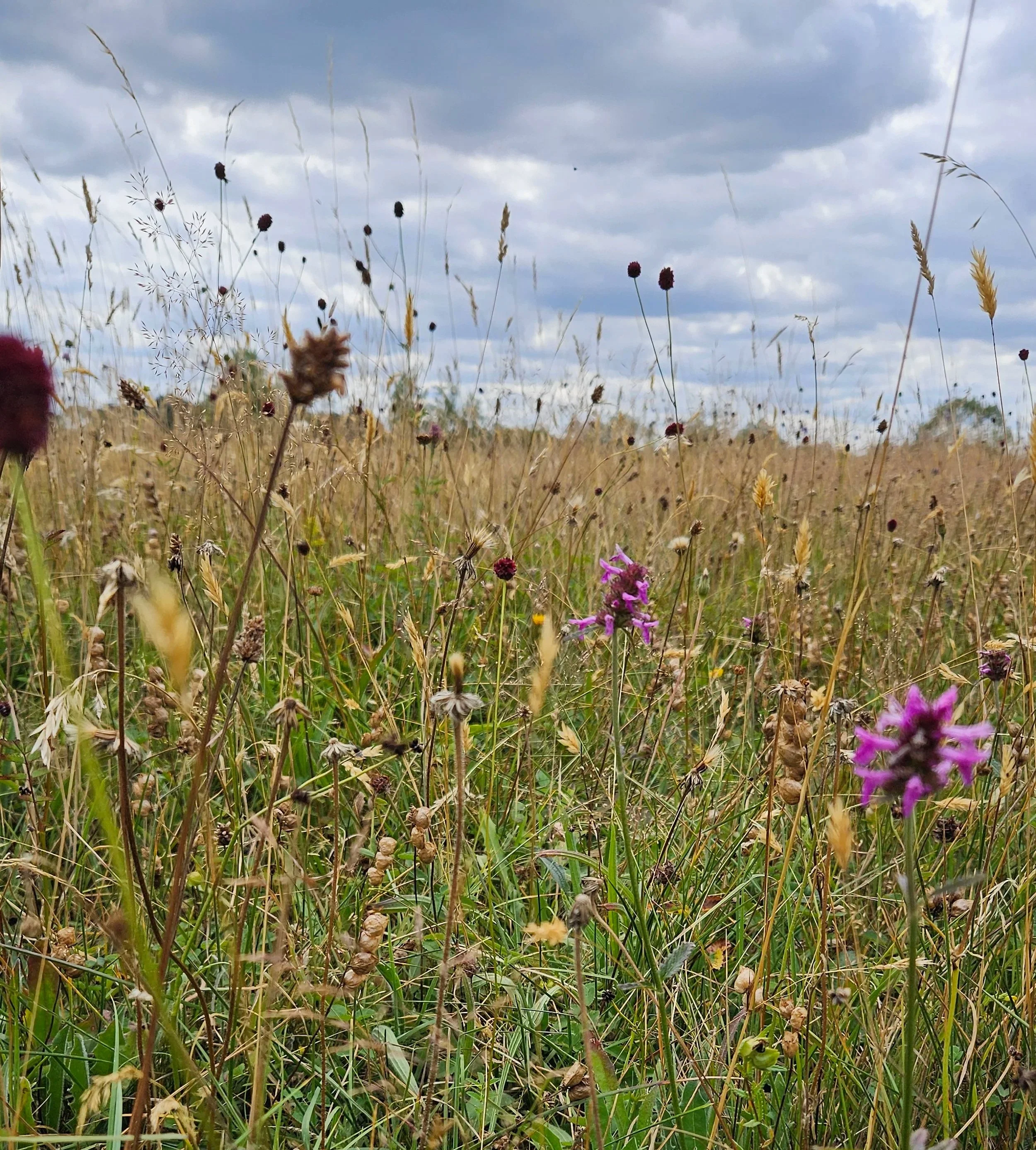
I am drawn to the natural world by a sense of wonder. It might be the intricacy of a small flower, the movement of grasses in the wind, or the sheer abundance of life in a meadow. Sometimes it is a fleeting moment of light that transforms an ordinary patch of ground into something extraordinary.
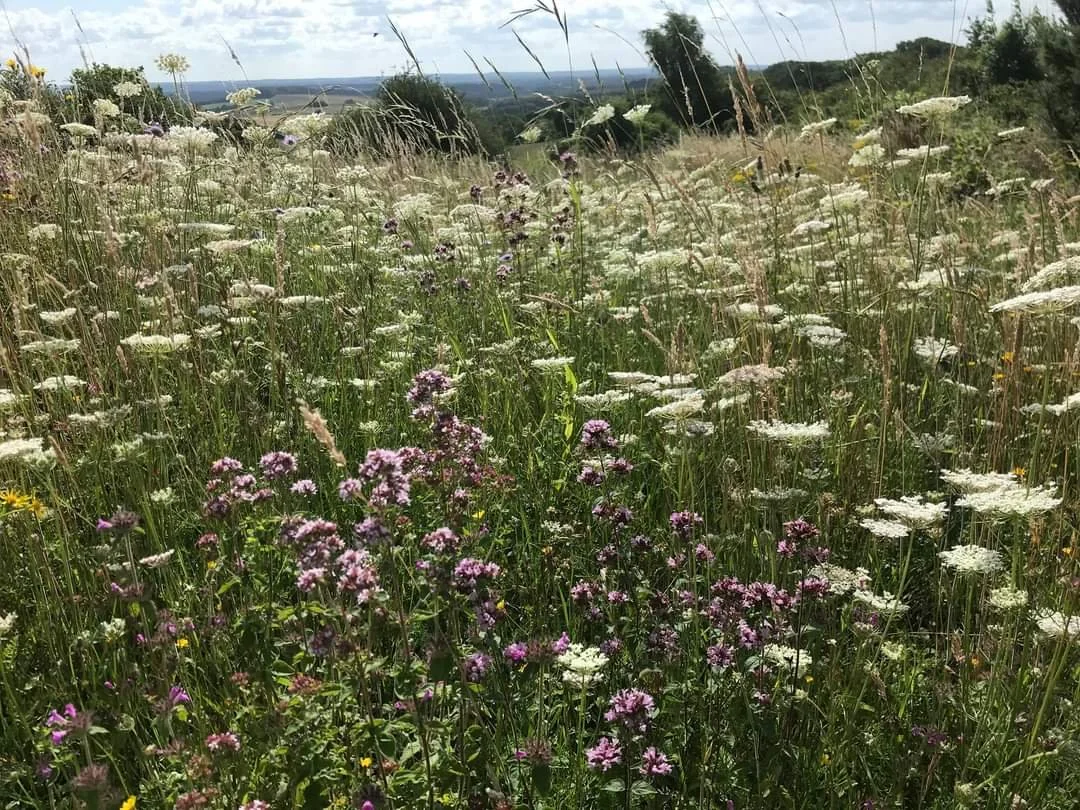
When I am in a meadow, I don’t experience myself simply as an observer, standing apart from what I see. I feel part of the same living world. There is a sense of connection that can be difficult to put into words: an awareness of being present in a place, attentive to its details and rhythms, and conscious of how much there is to discover.
It is this feeling that I want to find my way towards in painting.
I begin with what catches my attention, but noticing something is only the beginning. I look again, respond, change things, and look again. A colour might need intensifying; a mark might need softening or obscuring. Sometimes I discover something in the painting that sends me back to what I was trying to express in the first place.
The process of making becomes a way of staying with the experience, rather than simply recording what was in front of me. I want the painting to carry something of that feeling of awe and wonder: not just the appearance of a meadow, but something of what it is like to be there.
The work of layering
Working in layers gives me a way to explore that feeling. Each new layer changes the relationships between colours, marks and shapes. Pouring and splattering introduce an element of chance; using grasses and other plant material brings something of the physical world into the act of painting itself. I respond to what happens, sometimes following an unexpected mark, sometimes working against it.
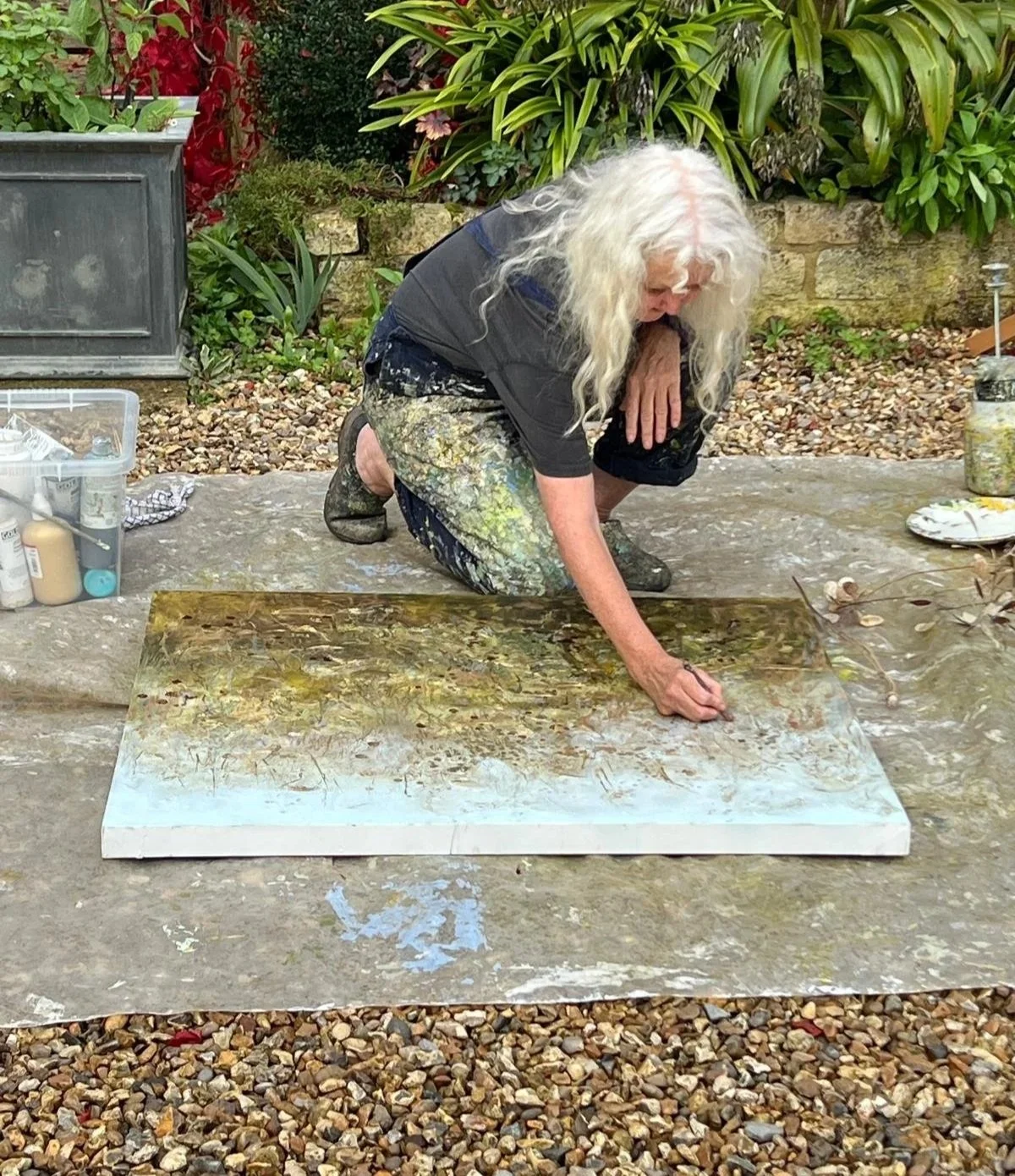
The painting develops through this exchange between intention and discovery. I am continually making decisions, but I cannot know in advance exactly where they will lead. Sometimes an area needs to be worked over; sometimes I need to stop interfering and allow what is already there to hold its own.
I also use metal leaf over previously worked surfaces. It can obscure earlier colours and marks, while the texture beneath continues to affect the way light falls across the painting. I like this tension between what is visible and what remains hidden.
The layers allow the painting to accumulate experience. Each one affects what follows, and the final surface carries traces of the decisions, discoveries and changes that brought it into being.
A place is never just one moment
The relationship between layers in a painting has a parallel in the way I experience a familiar landscape.
When I return to a meadow or hedgerow, I never encounter quite the same place twice. The plants grow, flower and disappear; the light changes; something I passed without noticing before suddenly catches my attention. Each visit adds to my experience of that place.
I carry those earlier encounters with me. I remember the flowers that grew there in spring, the grasses that caught the evening light, or the colours of a particular day. These memories sit alongside what I see now.
Sometimes a flower from an earlier season finds its way into a painting of a later one. It belongs to the place as I know it, even if it wouldn’t be flowering at that particular time. My experience of the landscape is made up of many encounters, and I don’t feel the painting has to restrict itself to a single moment.
Different times can coexist, just as earlier marks can remain within a painted surface.
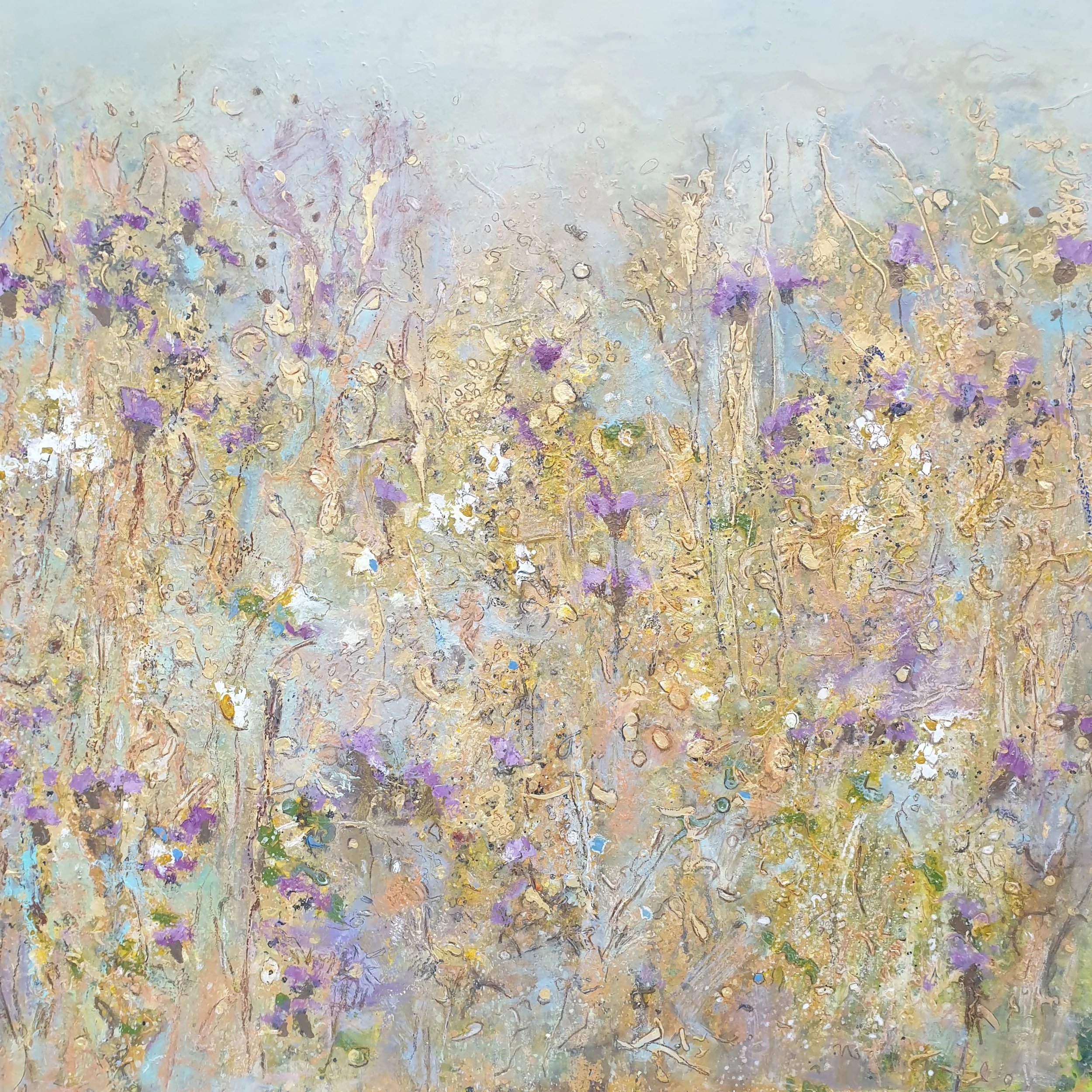
Suspended
For me, this is another way layering helps me approach what I want to express. It allows the painting to hold something of the accumulation that happens when we spend time in a place: the details we notice, the memories we carry, and the connections that grow through returning and looking again.
What the layers hold
I don’t think a painting can reproduce the experience of being in a meadow exactly. Nor do I want it simply to describe what I see. I am trying to find a visual language for something more difficult to pin down - that feeling of wonder and connection, of being absorbed in the natural world and recognising that I am part of it.
Layering is one of the ways I work towards this. The repeated acts of looking, responding, changing and refining keep me engaged with the painting and with the experience that began it. The process gives that experience time to develop, rather than fixing it too quickly into a finished image.
I don’t always know when I have arrived at what I am looking for. Sometimes the painting reaches a point where the elements begin to work together and something of the original feeling comes through. Sometimes I have to leave it and return later, looking with fresh eyes. There is no formula for knowing when it happens.
Perhaps this is part of what continues to draw me to painting: the possibility of spending time with something that fills me with wonder, of looking more deeply and discovering new ways of responding to it.
The things themselves are simple. What interests me is why I stop and look at them, and what happens when I do.
I am still discovering what the layers hold. What I know is that they are not simply a record of how a painting was made. They are part of my attempt to express what it means to be present in the natural world — to look, to feel, to remember, and to recognise my place within it.