
Way Leads on to Way
Over the past weeks, I’ve been working with birch bark gathered at home and here in Wales, exploring ideas of journey, threshold, and internal pilgrimage. The finished piece, Way Leads on to Way, consists of five vertical strands, five paths, formed from fragments of birch bark drilled and linked together with copper wire. The strands are secured at the top and hang freely, each a different length, each carrying its own quiet rhythm.
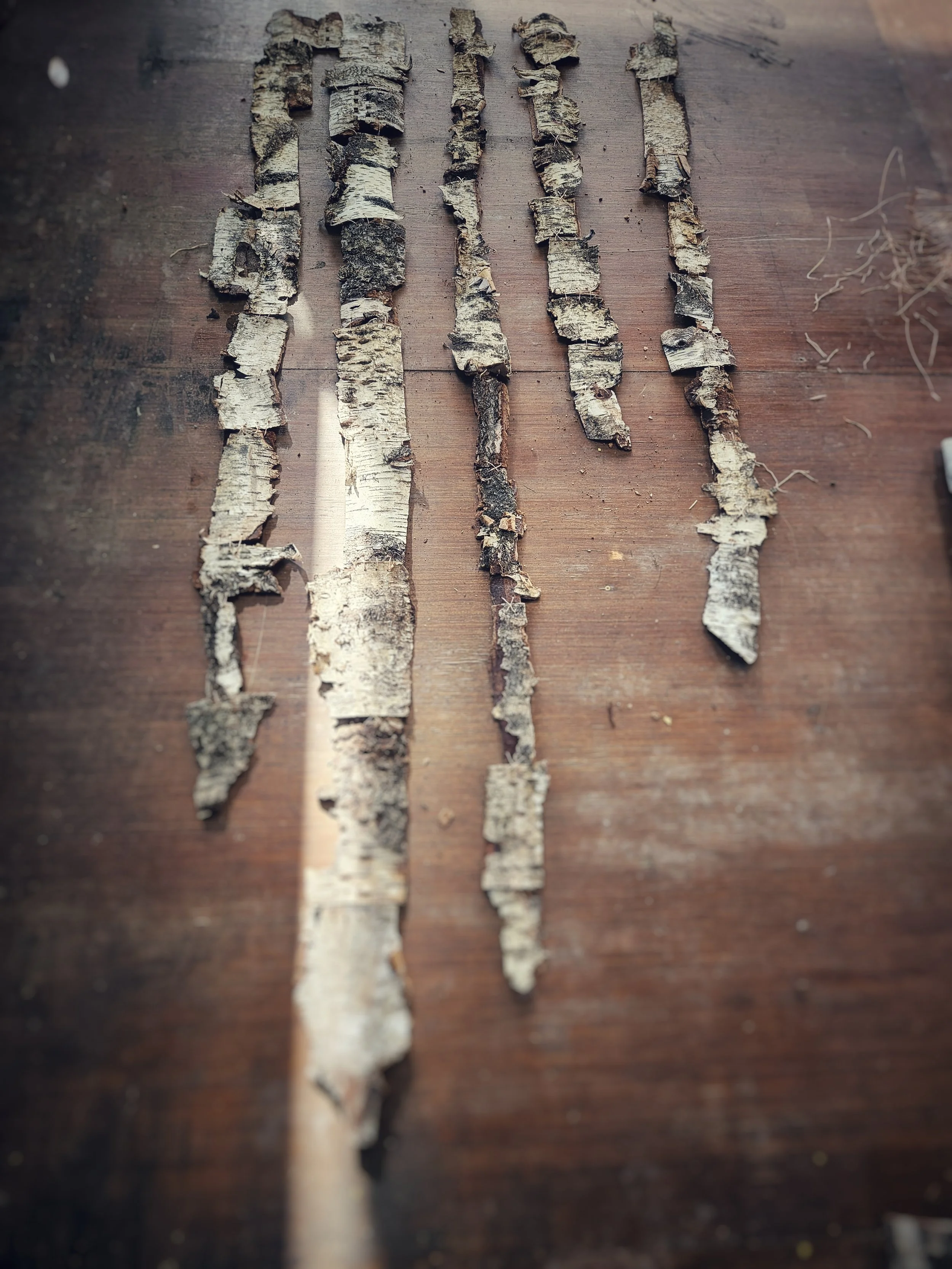
Work in progress
They are going to be installed against the dark exterior of the barn, where the pale bark will catch and holds the shifting light. Against that shadowed background, so the strands feel both present and ephemeral - like traces of paths glimpsed in mist.
The weather during this residency has been wild: persistent rain, strong winds, heavy skies. I had hoped to walk more of the surrounding landscape, to follow footpaths across the uplands and along old pilgrimage and drovers routes near Lampeter. Instead, much of the journey has been quieter and more contained. The repetitive, meditative act of drilling, threading, and spacing each fragment became its own form of walking. Each piece a step. Each gap a pause. The making itself began to mirror the rhythm of pilgrimage.
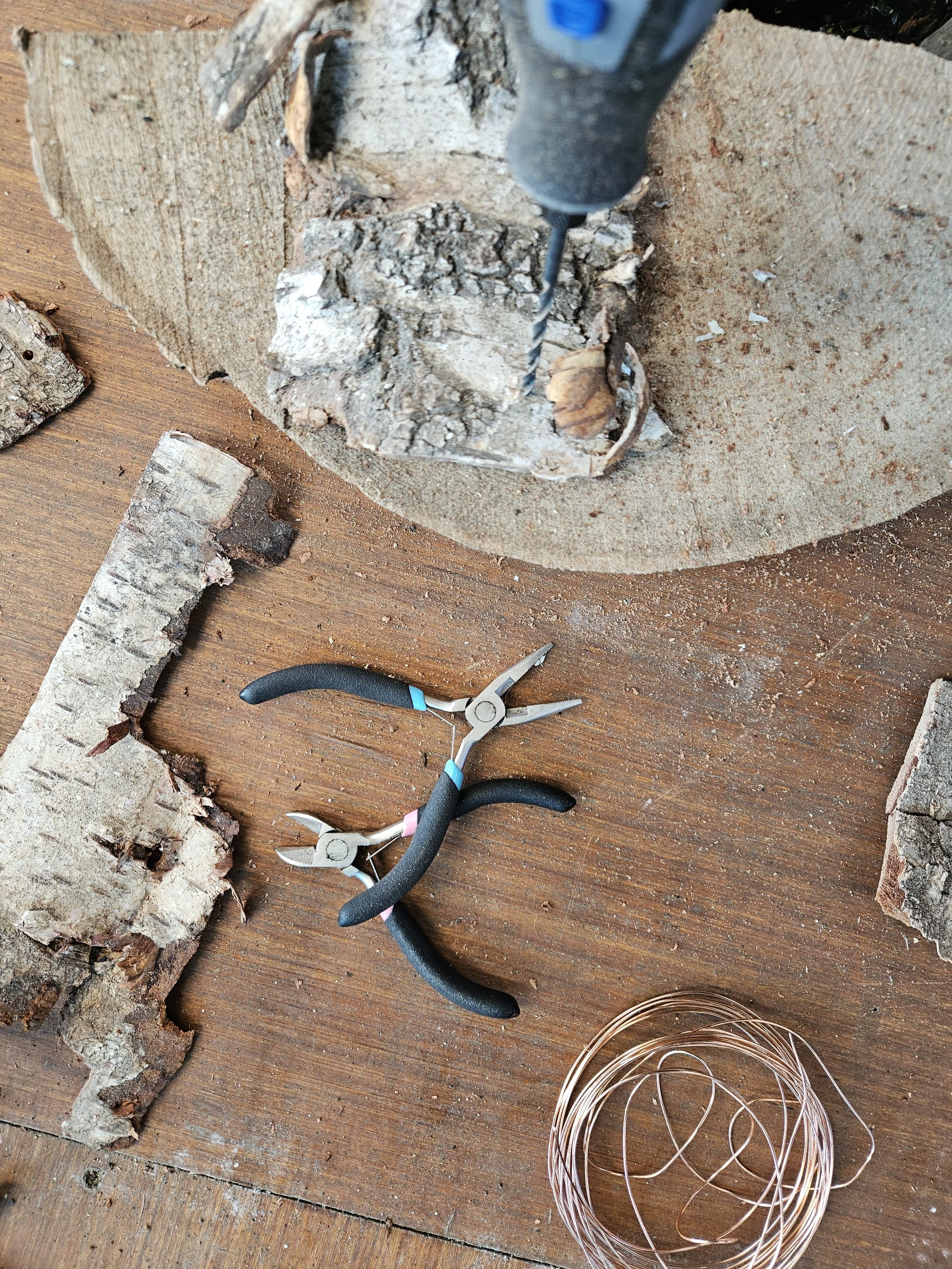
Work in progress
Each strand holds ten pieces of bark, varying in size and texture. Ten is the number of beads in a decade of the rosary before there is a break, a measured sequence followed by pause. That structure felt important: repetition without monotony, progression punctuated by breath.
There are five strands in total. The number felt instinctively right, and later I recognised its connection to my tarot practice, where the fives speak of motivation, purpose and action. Five parallel paths - distinct yet connected - unfolding side by side, suggesting movement set in motion and intention carried forward.
I chose copper to link the fragments because copper is the only metal found in every plant in the world. It felt appropriate, a connective thread that already belongs to living systems. The wire binds the bark pieces together, while also suggesting continuity: an unseen current running through each step of the path.
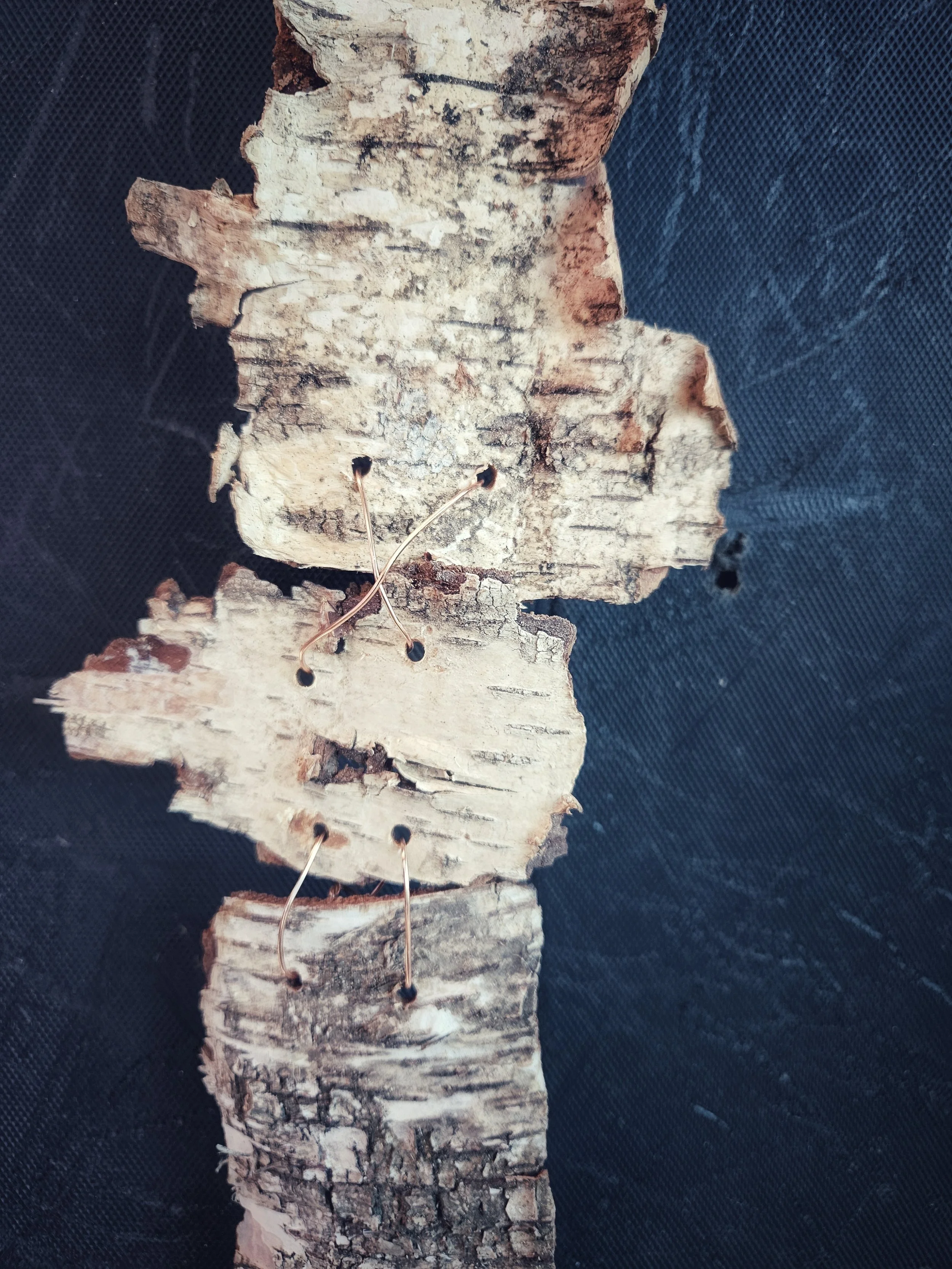
Joining the birch bark with copper wire
Early in the process, I considered the strands as something like prayer flags - horizontal markers that move with the wind and speak outward into the landscape. Gradually, the work shifted. By hanging the fragments vertically, more like rosary beads than flags, the emphasis turned inward. The strands became less about mapping the external terrain and more about tracing an interior one. A rosary is held, counted, moved through slowly; it is a tool for reflection. In this way, the piece forms a visual pilgrimage rather than a banner across space.
Each fragment varies in width, colour, and texture. Some sections feel steady and continuous; others thin and precarious. The path is not always easy. Drawing on Welsh landscape and myth - and on the guiding presence of Elen of the Ways, protector of roads and travellers, the work acknowledges both movement and uncertainty. Birch, or Beith in the Ogham alphabet, marks beginnings: renewal, first steps, the quiet unfolding of what follows.
Installed outdoors, the strands respond to air and weather. They shift subtly in the wind, casting fine shadows against the dark barn wall. In bright light they stand out sharply; in rain or dull skies they will soften, almost dissolving. Like paths half-seen in mist, they appear and recede.
Way Leads on to Way does not map a single road, but holds the suggestion of many. The title echoes a line from Robert Frost, reflecting on how one path leads inevitably to another. It speaks of consequence and continuation and of one step unfolding into the next. Like paths half-seen in mist, the strands hover between clarity and uncertainty, echoing the quieter journeys we walk within ourselves.
More from the blog …


The Enchantment Of Bluebells